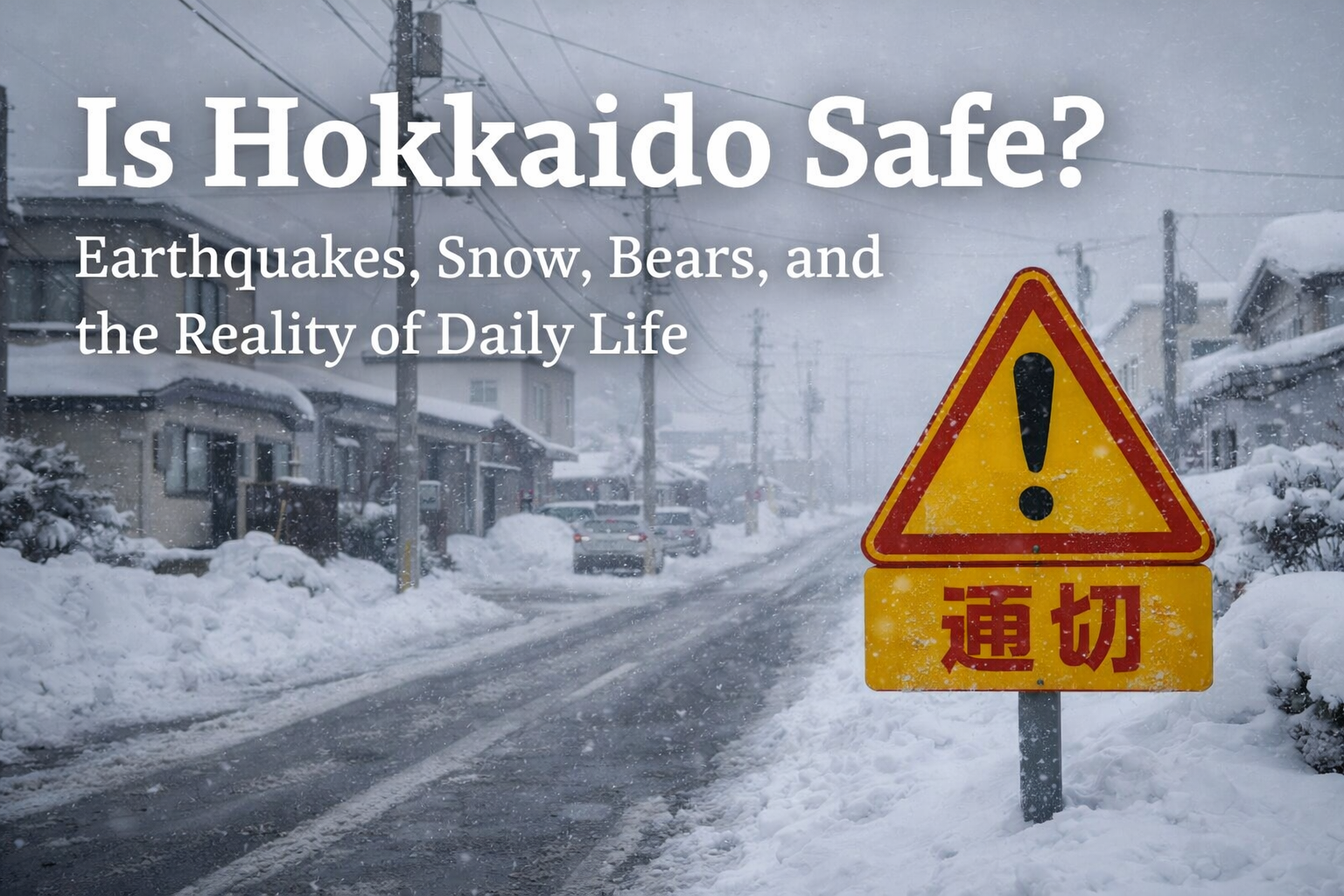
Is Hokkaido Safe?
Earthquakes, Snow, Bears, and the Reality of Daily Life
When people start researching Hokkaido, many eventually arrive at the same question:
“Is Hokkaido safe?”
Japan is known for earthquakes. Hokkaido is known for snow, cold winters, vast nature — and more recently, reports of bears appearing near residential areas.
Feeling concerned is natural. In fact, asking this question before making decisions is a sign of good judgment.
This article does not label Hokkaido as simply “safe” or “dangerous.”
Instead, it explains what real risks exist, and how people living in Hokkaido actually deal with them in everyday life.
- Why Safety Is a Common Concern About Hokkaido
- Earthquakes in Hokkaido: A Reality, Not a Surprise
- In Daily Life, Snow Matters More Than Earthquakes
- Most Winter Accidents Come From Overconfidence
- Safety Habits Are Part of Everyday Life
- Is Hokkaido Safe for Foreigners?
- Transportation and Safety Are Closely Connected
- Recent Concerns About Bears in Hokkaido
- How People in Hokkaido View Bears
- Final Answer: Is Hokkaido Safe?
Why Safety Is a Common Concern About Hokkaido
Hokkaido often carries two opposite images.
On one hand:
- Wide open nature
- Fewer people
- Quiet towns and cities
On the other hand:
- Earthquakes
- Heavy snow
- Severe winter weather
- Wildlife, including bears
From outside Japan, it can look beautiful — and intimidating at the same time.
The key point is this:
The risks in Hokkaido are not unexpected or hidden. They are known, discussed, and planned for.
Earthquakes in Hokkaido: A Reality, Not a Surprise
Yes, earthquakes occur in Hokkaido. That is a fact.
However, for people living here, earthquakes are not treated as sudden, shocking events. They are treated as part of the environment.
Buildings are designed with earthquakes in mind. Emergency preparedness is common knowledge. People do not live expecting earthquakes to never happen.
They live knowing they might.
Japan’s national earthquake monitoring system, operated by the
Japan Meteorological Agency
,
provides real-time seismic information that residents routinely check without panic.
This mindset often surprises visitors, but it is one of the reasons daily life remains calm.
In Daily Life, Snow Matters More Than Earthquakes
When it comes to everyday safety, snow has a much bigger impact than earthquakes.
During winter:
- Roads freeze
- Visibility drops
- Transportation slows or stops
- Schedules change easily
This is not an occasional disruption. It becomes part of daily routine.
In Hokkaido, being unable to follow a plan exactly is normal in winter.
As a result, people:
- Avoid unnecessary trips
- Build flexibility into schedules
- Cancel plans without hesitation
Most Winter Accidents Come From Overconfidence
Winter in Hokkaido is harsh, but most serious accidents do not happen because winter is “too extreme.”
They happen because people underestimate it.
Common causes include:
- Wearing unsuitable shoes
- Ignoring weather warnings
- Forcing travel despite poor conditions
- Thinking “it will be fine”
In contrast, many risks disappear when basic rules are respected.
People in Hokkaido are not unusually tough. They simply do not fight nature.
Safety Habits Are Part of Everyday Life
Living in Hokkaido, safety-related behavior becomes routine.
For example:
- Checking the weather before leaving home
- Staying inside during blizzards
- Keeping emergency supplies
- Changing plans immediately when conditions worsen
These are not signs of fear.
They reflect a shared understanding that avoiding risk is smarter than reacting to it.
Is Hokkaido Safe for Foreigners?
In terms of crime, Hokkaido is generally very safe. Violent crime is rare, and many areas feel calm even at night.
However, there are important differences for foreigners:
- English support can be limited
- Help may not be immediately available in emergencies
- Accessing information requires effort
In Hokkaido, safety depends less on external support and more on personal preparation.
This way of thinking is closely connected to everyday routines, transportation choices, and winter life,
which are explained in more detail here:
Everyday Life in Hokkaido
.
Transportation and Safety Are Closely Connected
Outside major cities, cars are not optional in Hokkaido — they are practical necessities.
Winter driving requires care, but the environment is prepared for it:
- Winter tires are standard
- Snow removal is routine
- Drivers understand winter conditions
Problems arise mainly when people:
- Lack winter driving experience
- Rush schedules
- Overestimate their abilities
Distance and weather demand patience.
Recent Concerns About Bears in Hokkaido
In recent years, reports of bears appearing near residential areas in Hokkaido have increased.
Local governments regularly publish updates and safety notices through official channels such as the
Hokkaido Government
.
How People in Hokkaido View Bears
For residents, bears are not a constant source of fear.
They are treated as a known risk.
Sightings and restricted areas are announced through municipalities and police updates, including information provided by the
Hokkaido Prefectural Police
.
People adjust behavior rather than reacting emotionally.
Final Answer: Is Hokkaido Safe?
Hokkaido is safe for people who understand its environment and adjust their behavior.
It can become risky for those who ignore conditions or force convenience over reality.
Safety here is not about eliminating risk.
It is about understanding it.
This article forms the foundation of the “Safety & Reality” section of Living in Hokkaido.
Not to create fear — but to replace uncertainty with understanding.
コメント